

Managing Urinary Incontinence
Answering your questions about IUD side effects and urinary incontinence

Time for a Q&A to answer your questions about:
Is my IUD making me sad?
Should I address my incontinence before perimenopause?
Enjoy! And remember to e-mail your questions to ask@thesavvypatient.com or leave them in the chat.
Q: I got a Mirena IUD placed in January, and I’ve been struggling with intense feelings of sadness ever since. I wondered if my body is reacting poorly to the hormones? I quickly got off the pill in my late 20s for similar reasons. I wanted to try the Mirena because the hormonal dose is more localized and I wanted to reap the benefits of a lighter period. Is there good data around the potential side effects of Mirena on mood? What is my best non-hormonal alternative for contraception?
—So-So-Weepy
A: Different contraceptive methods have different pros and cons. Finding the right balance of pros and cons for you is key. It is true that of the hormonal birth control options available today, progestin-eluting IUDs like Mirena result in the lowest circulating blood levels of hormones.
Nonetheless, many women still experience symptoms after having an IUD placed. The most common symptoms are headache, breast pain, and acne. But a review of 22 studies found an association between progestin-eluting IUDs and mood symptoms. Depression was the most common mood change associated with progestin-eluting IUDs.
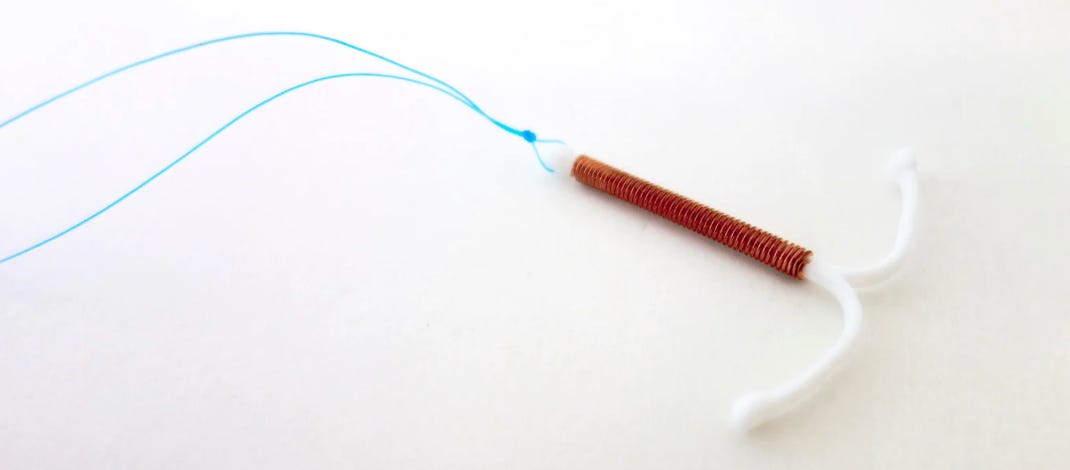
As for the best non-hormonal contraceptive, this is a matter of personal preference. The first thing to consider is whether your family is complete. If you want to be pregnant again in the future, non-hormonal methods are limited. You could consider a copper IUD. Like a progestin-eluting IUD, this is a set it and forget it option. Cooper IUDs prevent pregnancy for 10 years. However, they don’t have the benefit of lightening periods. In fact, some women find their menstrual bleeding heavier.
Other reversible non-hormonal forms of contraception are barrier methods including condoms, sponges, diaphragms and cervical caps. All these methods need to be used with spermicides every single time you have sex to be maximally effective.
If you don’t want to become pregnant again, you can put permanent methods of contraception on the table for you or your partner: vasectomy, tubal ligation, or salpingectomy. Vasectomy is the less invasive procedure. It is done in the office under local anesthesia and downtime is minimal. (My husband coached our son’s soccer game less than 24 hours after his vasectomy.)
Tubal ligation or salpingectomy can be done laparoscopically, but it is a pelvic surgery requiring general anesthesia and recovery time. As with any surgery there is a small risk of complications. However, a salpingectomy—removing the fallopian tubes completely—does reduce a woman’s risk of developing ovarian cancer by about 80%.
The Savvy Short: While a progestin-eluting IUD offers lower levels of hormone that enter the bloodstream, some women do experience systemic side effects including headache, breast pain, acne, and even mood changes.
Q: I am a 44-year-old mom of three kids. Since my last pregnancy three years ago I have struggled with leaking urine when I run. I am worried this will get worse when I start menopause. What can I do now and later to minimize my symptoms?
—Anonymous
