

What is the Hormone Loop?
Understanding the Basics of Our Endocrine System

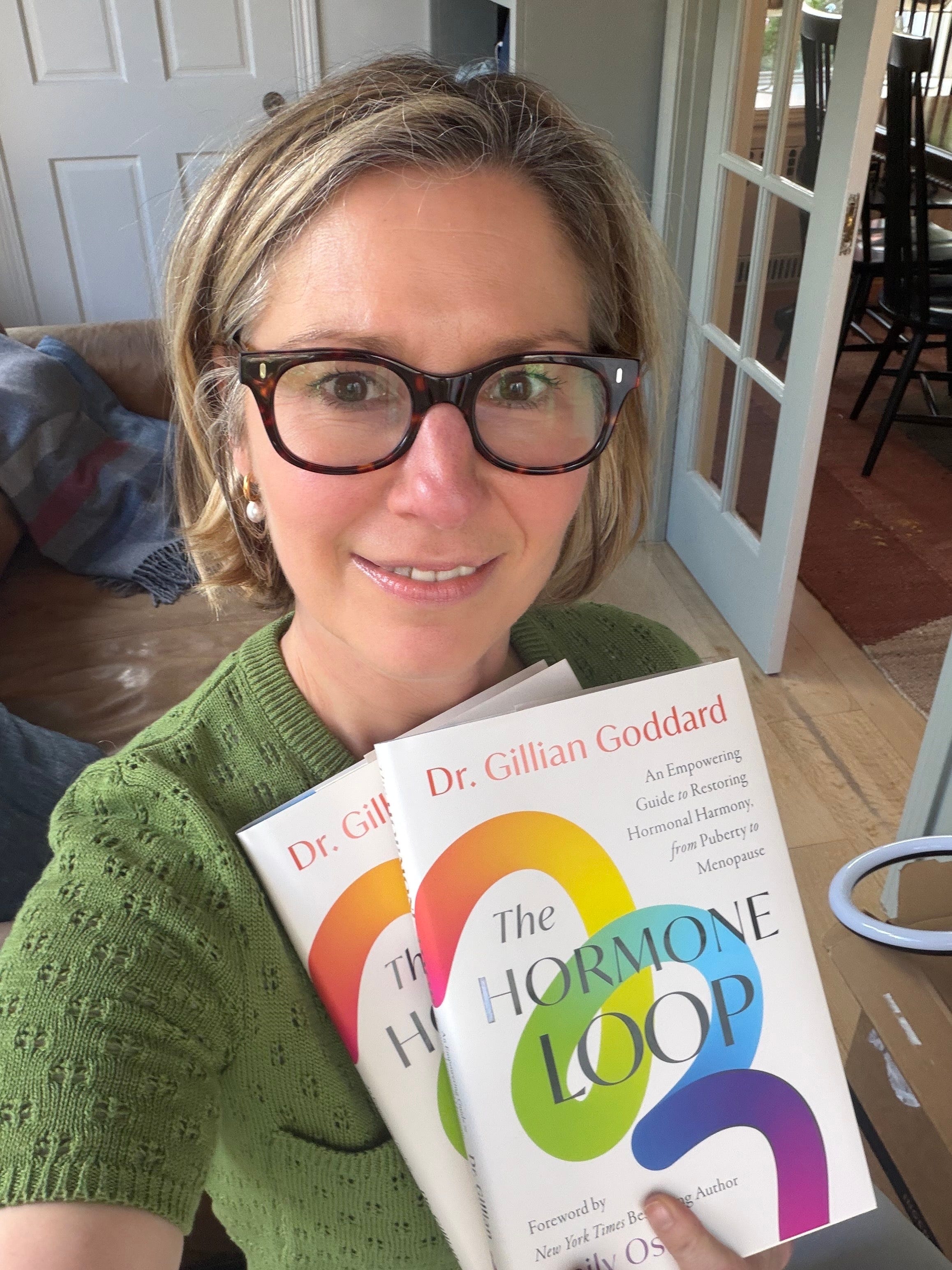
Hello everyone! My book, The Hormone Loop, is out today and so much of its journey is thanks to you. I thought I’d share this excerpt from the book because it gives a fuller explanation of something I refer to a lot here—how our hormones function in a loop. I hope it gives you a clearer understanding of the complexity of our hormonal systems.
There’s so much action in a thriving metropolis. Wide highways carry cars, trucks, and busses full of people and things. Networks of small roads connect highways to buildings and neighborhoods. People throng down crowded sidewalks on foot and on bikes. Underground and overhead trains operate on separate but parallel networks. It all works in concert to keep the city humming along smoothly.
Like this bustling city, our bodies are a series of complex networks. Our nervous system is the rail system, and our heart and blood vessels are the highways and local roads. Another critical network in this city is the endocrine system. The endocrine network is made up of a series of glands scattered throughout our body, from our brain to our pelvis. Each gland makes just the right amount of hormone at the just right time because it is part of a feedback loop called the hormone loop.
Picture two people playing Ping-Pong. They’re both pretty good at it, so the ball is flying back and forth smoothly. Each player has to react quickly, maybe sometimes repositioning themselves to hit back the shot. Of course, if they miss the ball or hit it off in a wonky direction, the game falls apart. That’s how the hormone loop works: the glands are the players, and the ball is a hormone, moving and responding to keep the body in balance.
At its most basic, a hormone is a message from one part of the body to another. The message travels in the bloodstream and contains instructions for making or building something, like a recipe for chocolate chip cookies or the instructions for building your IKEA coffee table. When we measure hormone levels with a blood test, we are measuring how many copies of a particular recipe are in circulation at that moment. Some recipes circulate for just a few minutes. Other circulate for a week or more.
As endocrinologists—aka gland and hormone experts—we’re taught that you can’t just look at one gland and one hormone to understand what’s going on in someone’s body. The hormone loop can trick you that way. Instead, you have to look at all the whole Ping-Pong game—the players and the ball.
In fact, the hormone loop is actually four distinct but interconnected feedback loops: the reproductive loop, the thyroid loop, the growth hormone loop, and the adrenal loop. Each one has a vital function for our bodies. Together, they set the rhythms of our lives from day to day, month to month, and year to year. Understanding the hormone loop and its changes will give you a greater understanding of your body, and give you advance knowledge of what is coming next.
But before we get into the four feedback loops that make up the hormone loop, let’s start with a quick anatomy lesson.
The Anatomy of the Hormone Loop
Glands are the key players in the hormone loop. A gland is an organ that makes a hormone. Some glands are probably familiar to you, like the ovaries. Others might be new to you—you may not know you have parathyroid glands (or have any idea what they do). And yet, they are there helping to keep your body running smoothly.
Beginning at the top, in the brain, is the hypothalamus. The hypothalamus is actually both a gland and a part of the brain. It sits on the underside of the brain at the crossroads where all the different areas of the brain come together. And its location is key to its function. It collects information from all different parts of the nervous system and uses that information to keep the body balanced. The hypothalamus helps control body temperature, heart rate, hunger and thirst, mood, sex drive, and more. It does that by synthesizing the information it gets from our body and our environment and using that information to tell the other glands what to do.
Often those instructions are directed to the pituitary gland. The pituitary gland sits just below the hypothalamus. It’s the size of a jellybean and it hangs below the brain in small bony box just behind the bridge of the nose. It’s surrounded by critical structures, including the nerves of vision just above it, and the arteries that carry blood to the brain on either side. Sometimes called the “master gland,” the pituitary uses the information it gets from the hypothalamus to tell many of the other glands in the body what to do.
The thyroid gland is a spongy, butterfly-shaped structure draped over our windpipe, just above our collarbones. Nearby are the parathyroid glands. “Para” means nearby or alongside. So, the name “parathyroid” just describes the location of these four pea-sized glands, not what they do. Like the parathyroid glands, the adrenal glands are also named for their location. The two adrenal glands sit like three-cornered hats, one on top of each kidney. The pancreas occupies the upper part of the belly and looks a little like a fish, with a broad head and a thinner tail. It’s one of the larger glands and stretches six to ten inches across the belly. The ovaries are suspended in the pelvis near the open ends of the fallopian tubes that are connected to the uterus. The ovaries are oval-shaped, and they are about 2 inches long and 1 inch wide.
There are a few other organs that aren’t considered glands because making hormones isn’t their main job, but they do make some hormones. The liver, the kidneys, the gut, the placenta, and even fat make hormones that contribute to the overall functioning of the hormone loop. When things are working well, the glands and other hormone-producing organs communicate and respond to one another in ongoing conversation.
Now that you’ve got the anatomy down, we can talk about function. There’s a lot of crosstalk between the four distinct loops, but it’s helpful to think of them separately to understand their basic functions.
The Reproductive Loop
The first of the four loops might be the one that comes to mind when you hear the word “hormone”: the reproductive loop. All animals, including humans, are biologically programmed to procreate (of course humans can choose not to). The job of the reproductive loop is to allow us to make more humans.
All four hormone loops start with a predictable pattern. You’ll catch on quickly. In the reproductive loop, first, the hypothalamus takes in information from the rest of the body and the environment to decide if the conditions are right for pregnancy. If the answer is yes, the hypothalamus will make a hormone called gonadotropin-releasing hormone or GnRH. GnRH doesn’t last long or travel very far. Its target is the pituitary gland. In the pituitary gland, GnRH tells special cells, called gonadotrophs, to make follicle-stimulating hormone (FSH). FSH travels in the blood. Its main target in women’s bodies is the ovaries. FSH signals to the ovaries to mature an egg and to make estrogen. Estrogen tells the uterus to grow a uterine lining to prepare to support a pregnancy, but it also feeds back to the hypothalamus and the pituitary gland. When estrogen in the pituitary gland reaches a certain level, it triggers the pituitary gland to release a large amount of luteinizing hormone (LH) all at once. LH travels back to the ovary, where it tells the now mature egg to ovulate.
When the egg ovulates, the nest of cells left behind is called the corpus luteum. The corpus luteum makes the hormone progesterone. Progesterone stabilizes the uterine lining so that a fertilized egg can implant. Progesterone also feeds back to the hypothalamus and pituitary gland to shut off GnRH, LH, and FHS. If a fertilized egg doesn’t implant in the uterus around fourteen days after ovulation, the corpus luteum will break down, progesterone levels will fall, and the uterine lining will slough off. That’s a menstrual period. With progesterone levels low, the hypothalamus will start making GnRH and the whole cycle, the menstrual cycle, starts over again.
But the ovaries aren’t the only glands FSH and LH target. They also act in the adrenal glands where they tell the adrenal glands to make testosterone. My patients are often surprised to learn that women have testosterone. Even though we often talk about some hormones as being “male” and some as being “female,” everyone has both estrogen and testosterone, just in different amounts. The role of testosterone in women’s bodies is still poorly understood, but we think it plays a role in sexual desire and arousal.
To learn about the other three loops, please check out The Hormone Loop: An Empowering Guide to Restoring Hormonal Harmony from Puberty to Menopause, wherever books are sold, or at your local library! You can also listen to our podcast episode, Hormones 101.
